
What a SEER Rating Is & Why It Matters in North Texas
When researching air conditioners or heat pumps, you will likely come across SEER rating charts. But what exactly is a SEER rating chart, and what do those scores mean?
SEER stands for Seasonal Energy Efficiency Ratio. It measures how efficiently an air conditioner or heat pump cools your home. The score is calculated by dividing the total cooling output of a system over a typical cooling season (measured in British thermal units) by the total amount of electricity it consumes during that same period (measured in watt-hours).
A higher SEER rating means your system delivers the same cooling output while using less electricity, making it more energy efficient. This matters in warmer climates like Rockwall and the greater Dallas-Fort Worth area, where air conditioning units run for extended periods during the year. Units with lower ratings typically increase energy consumption, raise utility bills, and may no longer meet current minimum efficiency standards.
The Lyons air conditioning technicians in Rockwall, Texas, help you select the right energy-efficient air conditioner or heat system for your property. We install new HVAC systems that meet today’s efficiency standards, helping lower energy costs while keeping your home or business comfortable.
Call (469) 224-1512 today to speak with an HVAC expert about choosing a SEER-rated system that supports your home’s energy efficiency and comfort.
How SEER Ratings Affect Your Energy Bill
Your AC system’s SEER rating directly affects how much electricity your home uses to stay cool. A system with a low SEER rating uses more energy to deliver the same cooling output and cooling power, driving up your electricity costs. A system with a higher SEER rating delivers that same comfort with far less energy.
Older air conditioning systems, especially those installed before 2006, typically carry a SEER 10 rating. These systems fall short of today’s minimum efficiency standards and offer no energy savings. In contrast, upgrading to a unit that meets the Southern U.S. minimum SEER rating, currently SEER 15, can cut energy consumption by 50% and reduce cooling costs by around 33%. You can also compare the heating seasonal performance factor (HSPF) to evaluate efficiency in systems that provide heating and cooling.
Although a new HVAC system may require a larger initial investment, the long-term energy savings often outweigh the upfront cost, especially in warmer climates like Rockwall, where cooling systems work harder for more months of the year.
Homeowners know they can depend on Lyons for Rockwall, TX AC installation services. We help you select the most energy-efficient unit for your space and ensure your AC system is installed correctly for optimal performance.

SEER Rating Chart: Compare Efficiency Ratings Side-by-Side
SEER ratings can provide crucial insight into how energy-efficient your AC unit is. To gain a better understanding of how ratings relate to energy efficiency, consider the chart below.
| SEER Rating | EFFICIENCY (Compared to SEER 10) | Estimated Energy Savings | Typical Usage Scenario |
| 10 | Baseline | 0% | Outdated systems (pre-2006) |
| 13 | +30% | ~23% savings | Minimum standard before 2023 |
| 14 | +40% | ~28% savings | Southern U.S. minimum as of 2023 |
| 15 | +50% | ~33% savings | Entry-level efficiency upgrade |
| 16 | +60% | ~38% savings | Balanced cost and performance |
| 18 | +80% | ~45–50% savings | Ideal for high-use households |
| 20 | +100% | ~55–60% savings | Smart home integrations and newer builds |
| 22 | +120% | ~65%+ savings | Premium/high-end systems |
| 24-26+ | +150% | ~70%+ savings | Ultra-high efficiency, variable-speed units |
NOTE: Savings estimates are based on Rockwall, TX average electric rates (~$0.14/kWh) and usage patterns.
SEER2 vs SEER Comparison Chart
Until 2023, the SEER rating system was the standard for measuring AC efficiency ratings. That changed when the Department of Energy introduced SEER2 ratings, which better reflect a unit’s performance under real-world conditions.
Both systems calculate cooling output over an entire cooling season divided by total electric energy input. However, SEER2 testing procedures simulate outdoor temperatures, airflow resistance, and duct pressure, which impact a unit’s actual efficiency in real homes.
Because of these updates, SEER2 scores appear slightly lower than older SEER ratings for the same cooling output. The chart below compares the two systems and shows how newer standards affect minimum efficiency requirements.
| SEER Rating (Pre-2023) | SEER2 Equivalent | Efficiency Adjustment | What Changed? |
| 13 SEER | 12.3 SEER2 | ~5–7% less efficient rating due to new testing | Accounts for more real-world conditions (static pressure, airflow) |
| 14 SEER | 13.4 SEER2 | ~5–7% reduction | Updated to reflect true performance in typical ducted systems |
| 15 SEER | 14.3 SEER2 | Slight adjustment | Fans, filters, and ductwork resistance now included |
| 16 SEER | 15.2 SEER2 | Slight adjustment | New baseline for high-efficiency units |
| 18 SEER | 17.1 SEER2 | Minimal change | Still considered top-tier efficiency |
| 20 SEER | 19.0 SEER2 | Minimal change | Reflects performance in homes with typical restrictions |
As of January 1, 2023, all newly manufactured HVAC systems must meet SEER2 standards, and non-compliant units can no longer be installed.
What is a Good SEER Rating in Texas?
A good SEER rating helps keep your home comfortable while lowering energy bills during long Texas summers. Lyons keeps you informed on heating and cooling 101 basics, including how SEER ratings affect your cooling costs.
In this region, a SEER rating of 16 or higher is typically recommended. Lower-rated systems use more electricity and may not meet current energy efficiency standards. A higher rating improves cooling efficiency, reduces energy consumption, and leads to greater energy savings over time.
Minimum SEER Ratings Required in Texas
The Department of Energy’s central air conditioner energy conservation standards vary by region. Southeast standards, which include Texas, apply only to split-system air conditioners. Government regulations for minimum efficiency requirements were updated as of 2023. The current SEER standards for the Southern United States include a minimum SEER rating of 15, equivalent to a SEER2 rating of 14.3. All air conditioning systems sold or installed in the Southern US must be rated SEER 15 or higher.
Comparing SEER Ratings: 14 vs. 16 vs. 20+
A 14 SEER system falls below the minimum efficiency requirement in Texas and uses more electricity to deliver the same cooling output. In comparison, a 16 SEER system uses about 20% less energy, offering better cooling efficiency and noticeable energy savings.
The difference becomes even more significant at higher ratings. A SEER 20 system can cut energy consumption by up to 60% compared to SEER 14, leading to lower utility bills and improved long-term energy savings.
If you’re looking for value, a SEER 16 system is a smart balance between upfront cost and performance. Systems rated 20+ are ideal for homeowners prioritizing maximum energy efficiency and reduced cooling costs.
How To Find SEER Rating on AC Unit
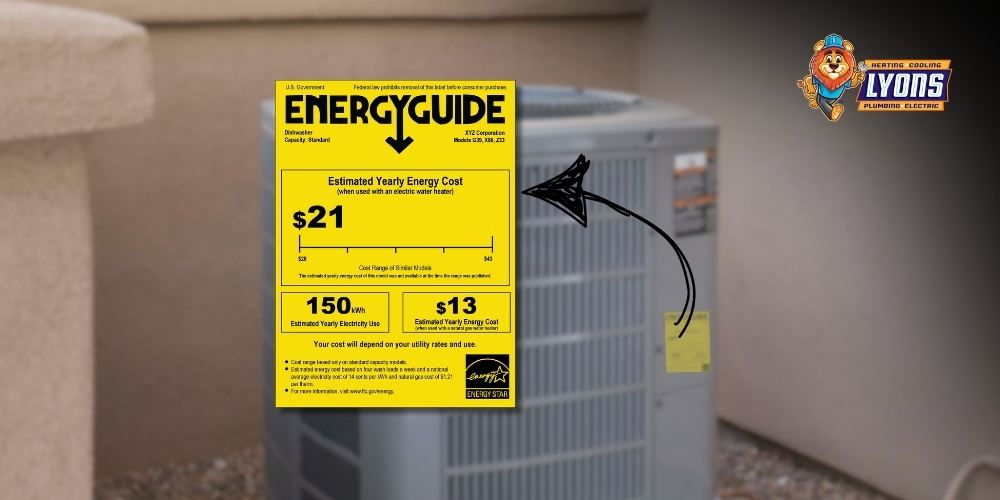
Most air conditioning units display the SEER and SEER2 rating on a yellow Energy Guide label located on the outdoor condenser unit. If the label is missing or unreadable, check the air handler, typically found in the attic or garage.
You can also locate the manufacturer name, model number, and serial number on the unit and look up the efficiency rating on the manufacturer’s website or by calling their support line.
Keep in mind, the labeled SEER rating reflects potential performance—not necessarily the system’s actual efficiency. Factors like ductwork quality, home insulation, layout, and climate can all affect how your AC unit performs in real conditions.
Is a Higher SEER Rating Always Better?
High SEER ratings offer many benefits and reflect greater potential efficiency, but they aren’t always the best fit for every home or budget. While a more efficient model can lower energy costs and reduce greenhouse gas emissions, other factors should be considered.
The upfront initial investment for a high-SEER unit can be significant. A mid-range AC system may offer better value if energy usage is moderate or electricity rates are low. On the other hand, if you have a large home, use your AC frequently, or live in a warmer climate, a higher SEER system may deliver more noticeable energy savings over time. Choosing a qualifying system may also make you eligible for a federal tax credit, helping offset the initial investment.
SEER Ratings and HVAC Rebates in Texas
Upgrading to a more energy-efficient HVAC system may qualify you for utility rebate programs. Under the Inflation Reduction Act, the Texas State Energy Conservation Office offers the Home Energy Performance-Based, Whole House (HOMES) rebate program and the Home Electrification and Application Rebate (HEAR) program.
The federal government also offers tax credits for air conditioners purchased and installed between January 1, 2023, and December 31, 2025. Qualifying systems include split system air conditioners rated equal to or greater than SEER2 17 and packaged central air conditioners equal to or greater than a SEER2 score of 16.

Use Our SEER Energy Savings Calculator to Estimate ROI on a New AC Unit
Want to learn how much you could save on energy costs with a new AC unit? Use our SEER energy savings calculator.
Start by entering your current system’s tonnage. You’ll find this on the manufacturer’s label—look for a number in the model (e.g., 024 = 24,000 BTUs). Divide that number by 12,000 to determine tonnage.
Next, select your current system’s SEER rating. The SEER rating is usually on the manufacturer’s label or on the air handler. If not, look up the model and serial number on the manufacturer’s website or call customer service.
Finally, select the higher SEER rating you’re considering. The calculator will estimate how much you could save in electricity costs over a typical cooling season.
Choosing the Right SEER Rating for Your DFW Home
If you’re comparing options for AC replacement services in Rockwall, your ideal SEER rating will depend on factors like your home’s square footage, how often you run your AC system, and how well your home is insulated.
Larger homes may benefit from a higher SEER rating to maximize cooling efficiency and long-term energy savings. A mid-range system might offer better value for smaller spaces or lower usage. Higher electricity costs and frequent usage may justify investing in a higher efficiency system.
The Lyons team helps homeowners throughout Rockwall and the DFW area choose energy-efficient systems that support their home’s energy efficiency and comfort year-round. Our team stays updated with the latest HVAC industry standards to help you make informed decisions.

For All Things HVAC & Energy Efficiency, Choose Lyons Air in Rockwall, TX
Rely on Lyons Air Conditioning and Heating for knowledgeable local service. Our licensed HVAC contractors and technicians bring years of experience working with air conditioning systems in Rockwall and the surrounding area.
We understand the impact of SEER ratings, system sizing, and proper installation on overall cooling efficiency and long-term energy savings. Whether you’re upgrading an outdated AC unit or comparing options for a new HVAC system, our team provides honest recommendations backed by industry knowledge.
Don’t wait to reduce your energy bills and improve your comfort. Learn more about energy-efficient, cost-effective AC systems today! Call (469) 224-1512 or use our online contact form to schedule an appointment.